
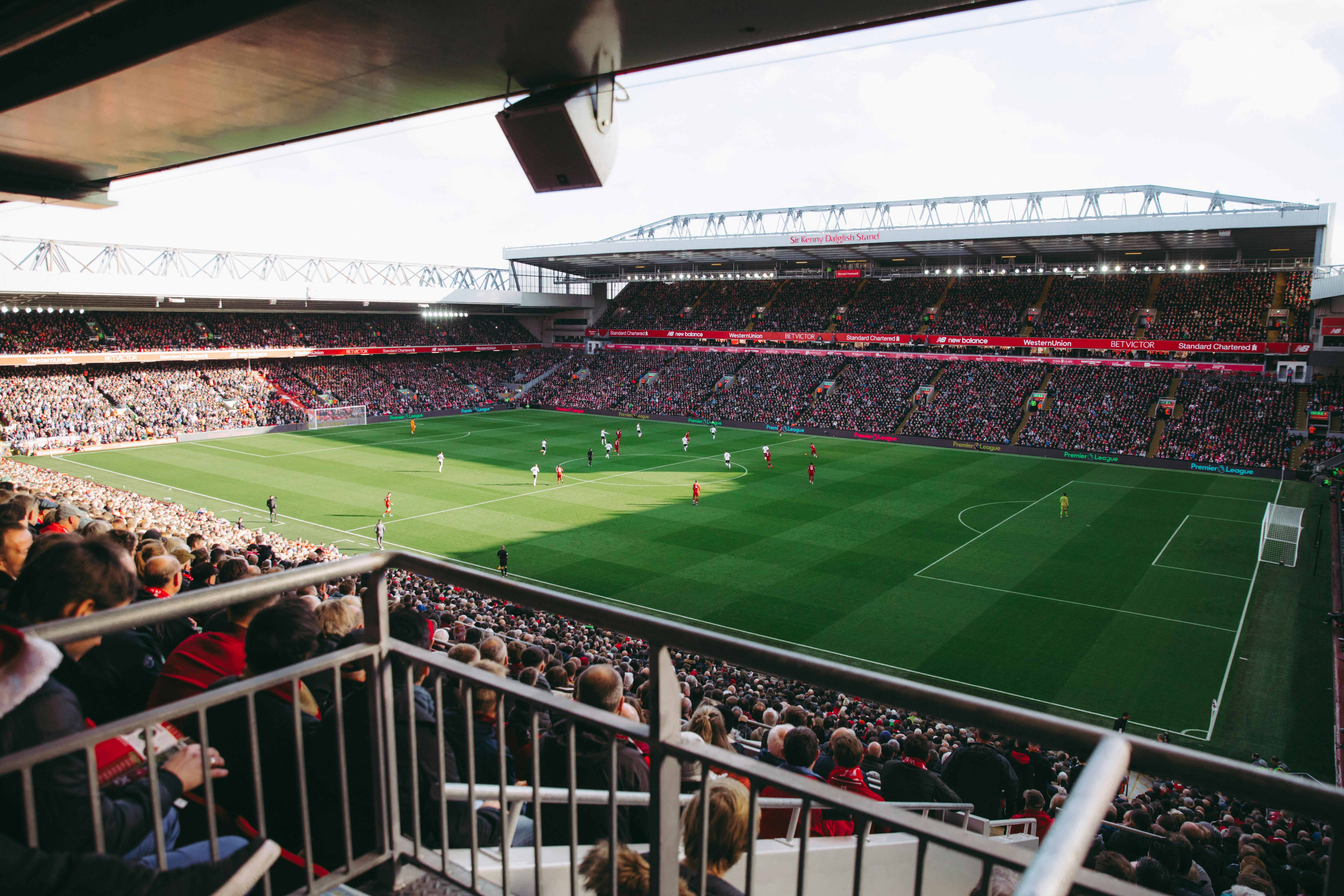
Whether a match survives heavy rain is decided by construction that happened years earlier and sits entirely out of sight beneath the grass.
Water has to move down, not sideways
A field that sheds water across its surface produces puddles at the low points and a ball that stops dead in them. Effective drainage moves water vertically instead.
That requires a root zone built mostly from sand, because sand has large gaps between particles that water passes through quickly.
Sand also holds very little nutrition or moisture, so the surface that drains best is the one that needs the most active irrigation and feeding.
Layers are graded deliberately
Beneath the root zone sits coarser gravel, and beneath that a network of perforated pipes running to a collection point.
The change in particle size between layers is engineered rather than incidental, because water pauses at the boundary until enough has accumulated to move through.
That pause is what keeps the root zone moist rather than draining instantly, so the layering solves two opposing requirements with one structure.
Compaction is the slow failure
Every match and every event compresses the profile, closing the gaps that water needs. A field drains progressively worse across a season without any visible change.
Groundstaff counter this by punching holes through the surface and replacing material, which is disruptive and therefore scheduled around the fixture list.
Non-soccer events accelerate the problem, since staging and crowds apply loads the profile was never designed to absorb.
Active systems add control
Modern installations run pipes that can apply suction to pull water down faster, or push air through the profile to dry and aerate it.
The same network can circulate warmed fluid to keep the root zone above freezing, which extends the playable season in northern American cities.
These systems are expensive to install and cheap to operate, which is why they appear in new builds and rarely as retrofits.
Measurement decides when to intervene
Sensors buried in the profile report moisture and temperature at several depths, so decisions rest on readings rather than on how the surface feels underfoot.
The useful signal is usually the difference between areas of the field, because a zone drying faster than its neighbors indicates a developing problem in the layers.
This is the least visible technology in a stadium and among the most consequential, since a poorly draining field changes how the sport is played on it.