
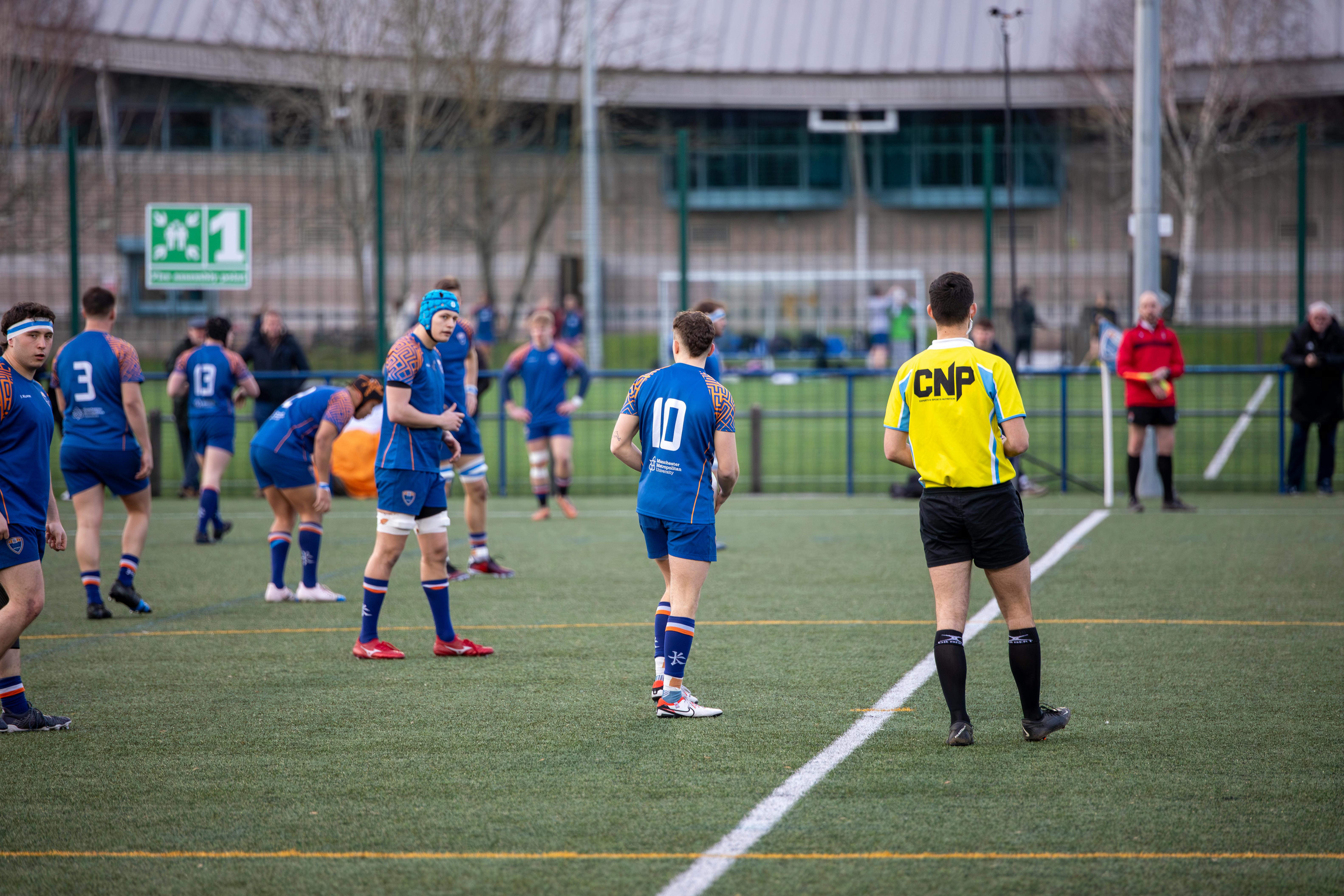
Fans raised on American football expect an official to step forward, switch on a microphone and explain what the review found. Soccer arrived at that practice late, and the delay was procedural rather than cultural.
The decision and the explanation happen in different places
In a review, the judgment is formed in a room away from the field and communicated to the on-field official through an earpiece. The person who reaches the conclusion is not the person holding the whistle.
That split means the announcer has to restate someone else's reasoning accurately, under time pressure, in front of a stadium. Any paraphrase that drifts from the actual finding creates a new problem.
Sports that announce reviews smoothly usually have the deciding official on the field with a monitor. The explanation is first-hand, which is why it sounds fluent.
The wording has to survive being quoted
An announcement is recorded by every phone in the building and clipped within minutes. Whatever phrasing the official chooses becomes the league's public account of the incident.
That pushes officials toward a fixed script with a small vocabulary of outcomes, because improvised wording invites arguments about what a particular adjective implied. Precision matters more than fluency.
Scripting has a cost. A short standard phrase often fails to answer the question the crowd actually has, which is why announcements can feel unsatisfying even when they are correct.
Audio inside a stadium is not a solved problem
A referee microphone has to be heard over a crowd, through a system designed mainly for music and safety messages. Reverberation in a large bowl smears speech far more than it smears a chord.
The microphone also has to be muted the rest of the time, reliably, because an open channel around a live match captures things nobody intends to broadcast. That switching is a hardware and workflow question.
Newer venues install speaker arrays aimed at seating blocks rather than a few large horns, which improves intelligibility considerably. Older stadiums carry an acoustic handicap the officials cannot fix.
Timing decides whether the announcement helps
Announced too early, the explanation lands before the crowd has understood there was a review at all. Announced too late, the argument has already formed and the words are heard as a defense.
The useful window is short and depends on what the big screen has shown. If the video board has already replayed the incident, the announcement is confirming; if it has not, the announcement is informing.
Coordinating those two channels is a production task, and the people running the screen and the people running the microphone are not on the same crew in most buildings.
The broadcast hears something different
Television carries its own commentary over the same moment, so a stadium announcement competes with two voices already describing the incident. Broadcasters have to decide whether to duck their own audio.
Streaming feeds add a further complication, because their delay relative to the stadium means the explanation arrives after the reaction shot that follows it. The order of events inverts.
None of this is an argument against announcements. It explains why a practice that looks trivially simple from a seat took years of production plumbing to make routine.