
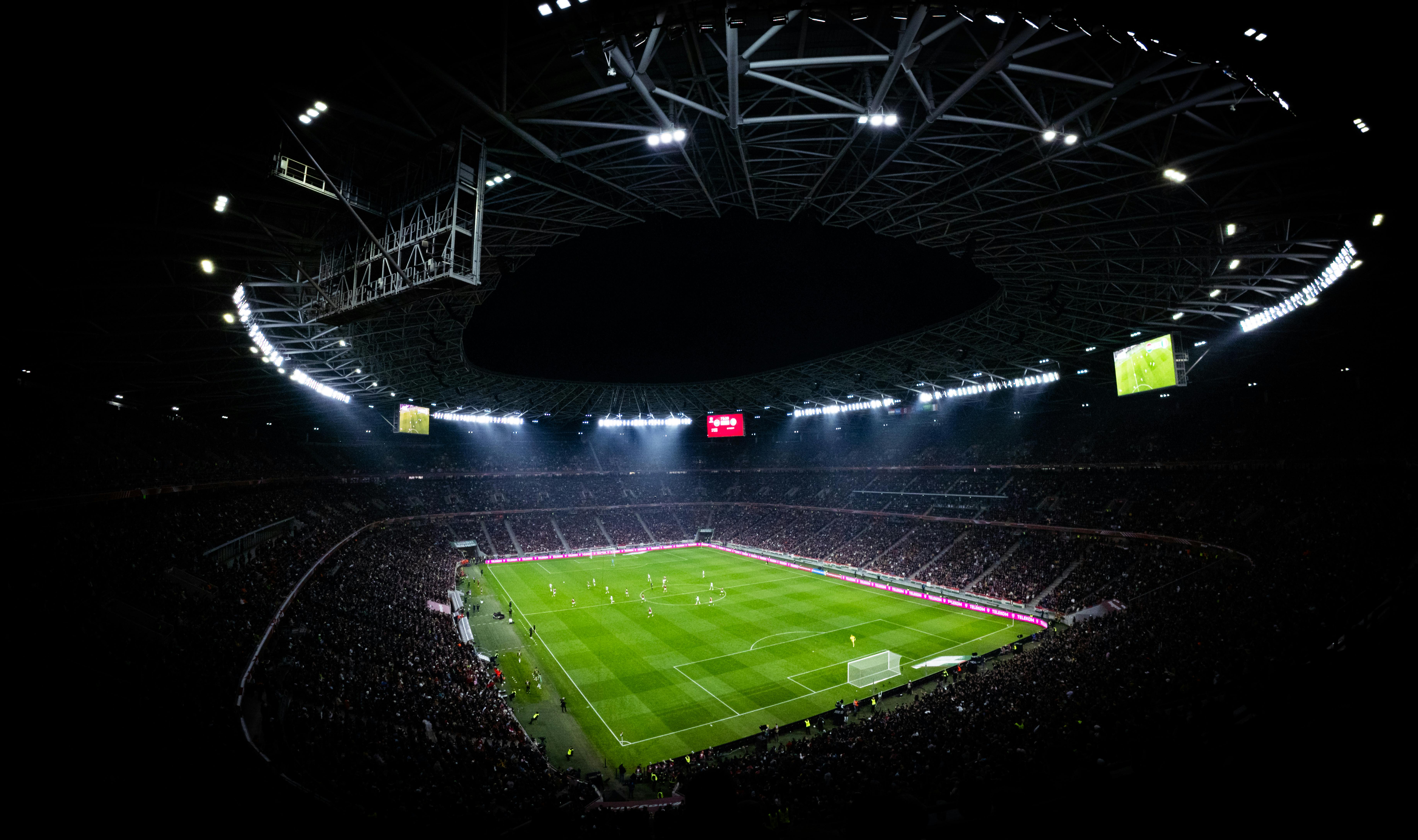
An American stadium built for another sport can host soccer, but the field is a different shape. Fitting it changes the geometry that every camera position was designed around.
The field is wider than the building expects
Soccer is played on a substantially wider surface than the sports many large American venues were built for, and the width is the binding constraint rather than the length.
Meeting it usually means removing or covering the first rows of seating along the sidelines, because the field edge has to move outward into space the seats occupy.
Removable lower seating sections exist for exactly this reason in newer buildings, and older venues achieve it by covering rows rather than moving them.
Camera platforms end up too close and too low
The main camera position is built for a specific distance and height relative to the field it was designed to cover. Widening the field changes both.
A camera that is now nearer the touchline has to zoom wider to see the full width, which flattens the sense of depth that makes tactical shape readable.
Height is the harder problem, since a low camera makes players at the far side overlap in the frame, and elevation cannot be added without new structure.
Temporary platforms carry real constraints
Productions solve this by building temporary positions, which must be rigged safely, reached by cable, and placed where they do not block the seats a venue is selling.
Every temporary position also has to be surveyed if automated systems are using its feed, which links the broadcast layout to the officiating technology.
The result is a compromise negotiated between the production, the venue and the competition, and it is usually settled venue by venue rather than by a standard.
Sightlines were computed for a different shape
Seating geometry is designed so that spectators can see the areas where play concentrates. Those areas differ between sports.
Soccer distributes play across the full surface far more evenly, so seats angled toward a central zone give a less satisfying view than they were built to give.
This is one reason purpose-built soccer venues have spread across the country despite larger stadiums being available and already paid for.
The conversion has to be reversible
Anchor points, covered seating and temporary structures all have to come out afterward, on a schedule set by the venue's other tenants.
That reversibility requirement rules out permanent fixes, so the same compromises are rebuilt each time rather than solved once.
Understanding this explains why the televised look of soccer varies noticeably between American venues showing the same competition.