
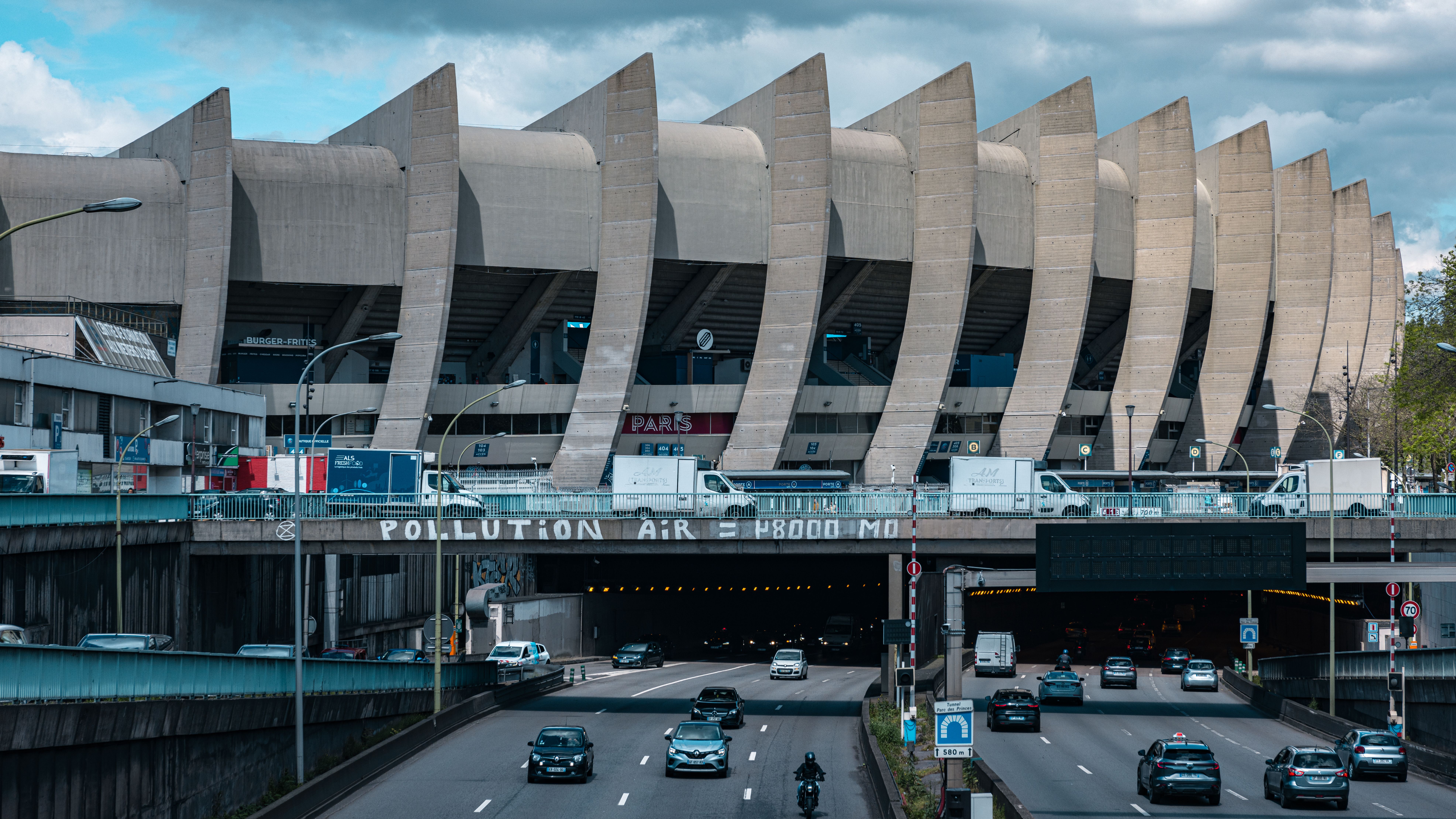
Grass in a large modern stadium frequently sits under artificial lighting rigs for hours each day. The reason is that the building itself has taken away the sunlight.
Stadium design blocks the light
Tall stands and extensive roof coverage cast shadow across much of the playing surface for most of the day. The taller and more enclosed the bowl, the worse the effect, and grounds at higher latitudes suffer most because the winter sun never climbs far above the stands.
Corners and areas beside the stands receive the least light and are usually the first parts of a pitch to deteriorate.
The problem worsened as stadiums grew steeper and roofs extended further to improve atmosphere and weather protection.
Grass has a minimum light requirement
Photosynthesis requires light above a certain intensity, and below that threshold a plant consumes reserves rather than building them. Duration matters as well as intensity, so a brief patch of sun is not a substitute.
Turf in permanent shade thins, roots shallowly and becomes vulnerable to wear and disease. It cannot recover from studs between fixtures.
Supplementary lighting supplies the missing energy directly, allowing growth in conditions the site could not otherwise support.
The rigs are mobile for a reason
Lighting units are mounted on wheeled frames so they can be positioned over the areas that need them and moved for matches and events. Covering a full pitch at once would require far more rigs than any club buys, so the equipment is rotated around the surface.
Shaded zones vary through the year as the sun's angle changes, so the rigs follow a rotation planned around seasonal shadow patterns.
They also generate heat, which is used deliberately in cold weather to keep soil temperature in a range where roots remain active.
Ventilation is the companion problem
Enclosed bowls restrict airflow as well as light, leaving humid air sitting over the surface and encouraging fungal disease.
Fans and underground ventilation systems move air through and across the profile to keep the surface drier.
Light, air movement and drainage are managed as one system, because improving any of them in isolation shifts the failure elsewhere.
Hybrid surfaces reduced but did not remove the need
Stitching synthetic fibres into a natural pitch stabilises the root zone and allows the surface to withstand far more use.
The living grass between those fibres still requires light, so hybrid construction increases tolerance rather than removing the growing requirement.
The combination of hybrid surfaces, mobile lighting and forced ventilation is what allows a heavily used pitch inside a deep bowl to survive a full season.