
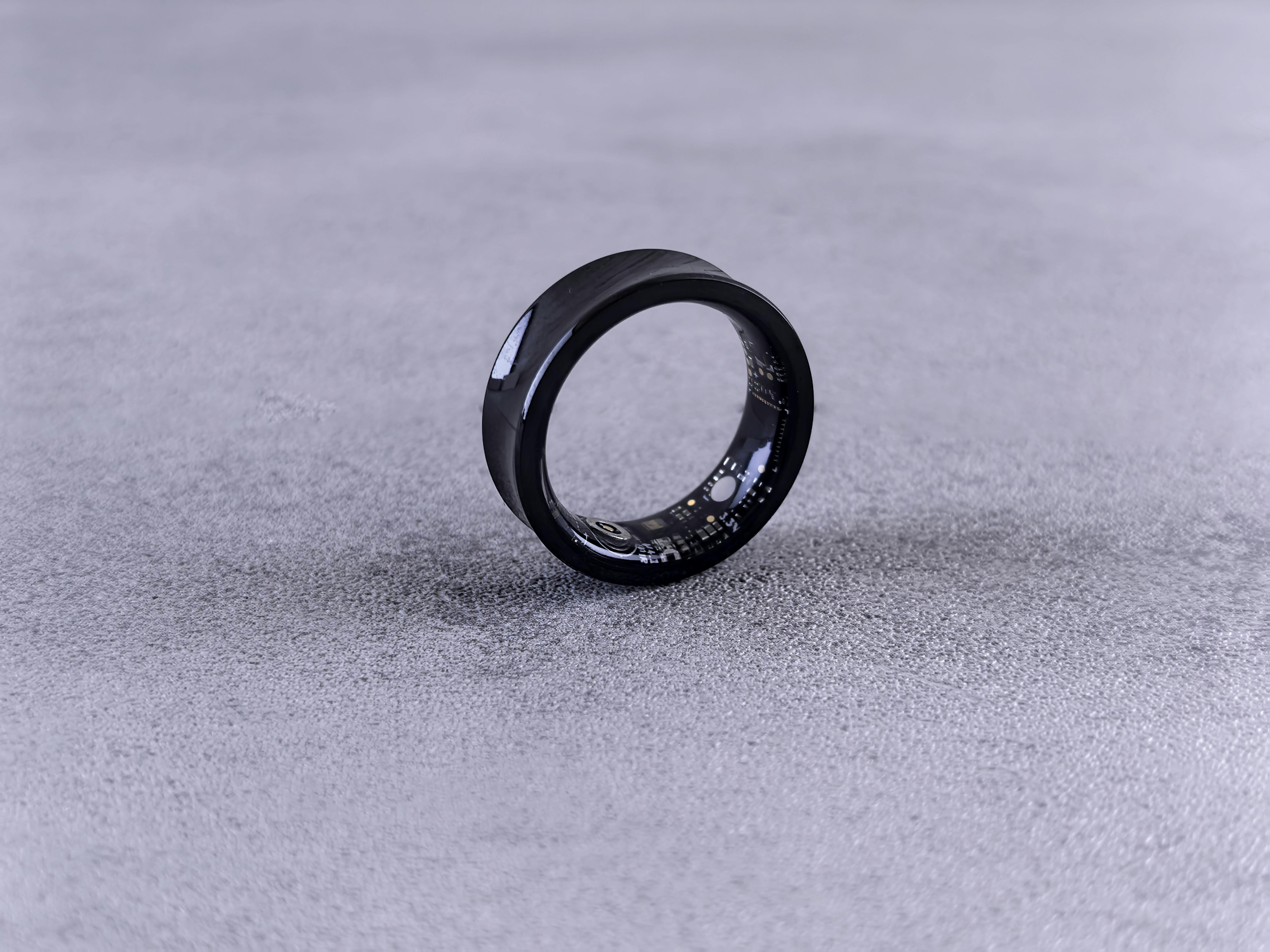
Two identical sensors worn by the same player in different positions will disagree, sometimes substantially. Placement is not a detail of fitting but a determinant of what is actually being measured.
The upper back is a compromise, not an ideal
Positional units are conventionally worn between the shoulder blades, which suits satellite reception because the antenna faces upward with a clear view of the sky. It is also a location where a vest can be secured without restricting movement.
That location sits some distance from the body's centre of mass, so it swings during running and rotates during turns and challenges. Those movements are recorded as motion of the player rather than motion of the sensor.
Manufacturers correct for this with filtering, but the correction is an assumption about how a torso moves rather than a measurement of how this particular torso moved.
Limb-mounted sensors describe a different thing entirely
Devices attached to the boot, ankle or shin measure the movement of a limb, which is far more violent and far faster than the movement of a trunk. Peak accelerations at the foot are enormous compared with anything recorded at the back.
This makes limb devices well suited to counting touches, strides and kicks, and poorly suited to describing overall running load without heavy processing.
Comparing a limb-derived figure with a trunk-derived one is comparing two different physical quantities that happen to share a name.
Optical measurement depends on tissue underneath
Sensors that shine light into the skin to detect blood flow are affected by the amount of tissue, the density of vessels and the tightness of the strap. The wrist, the forearm and the upper arm all perform differently for this reason.
Movement disturbs the contact between sensor and skin, which introduces error precisely during the high-intensity periods that matter most in football.
Chest-worn electrical measurement avoids that problem because it detects the heart's signal directly rather than inferring it from light, which is why it remains the reference method.
Fit matters as much as position
A loose device moves independently of the body and records that movement as data, while an overtight one restricts circulation and alters what an optical sensor sees.
Sizing therefore has a measurable effect on output, and squads that share equipment between players introduce variation that has nothing to do with performance.
This is one of the mundane reasons individual devices are assigned to individual players and kept with them.
Consistency is worth more than accuracy
Because placement effects are systematic, a player measured identically every session produces trends that remain meaningful even if the absolute values are imperfect.
Changing device, position or fitting protocol mid-season breaks that continuity and makes the historical record incomparable with what follows.
Staff therefore treat placement as a protocol to be frozen rather than a setting to be optimised, which is why unremarkable equipment often outlasts better alternatives.