
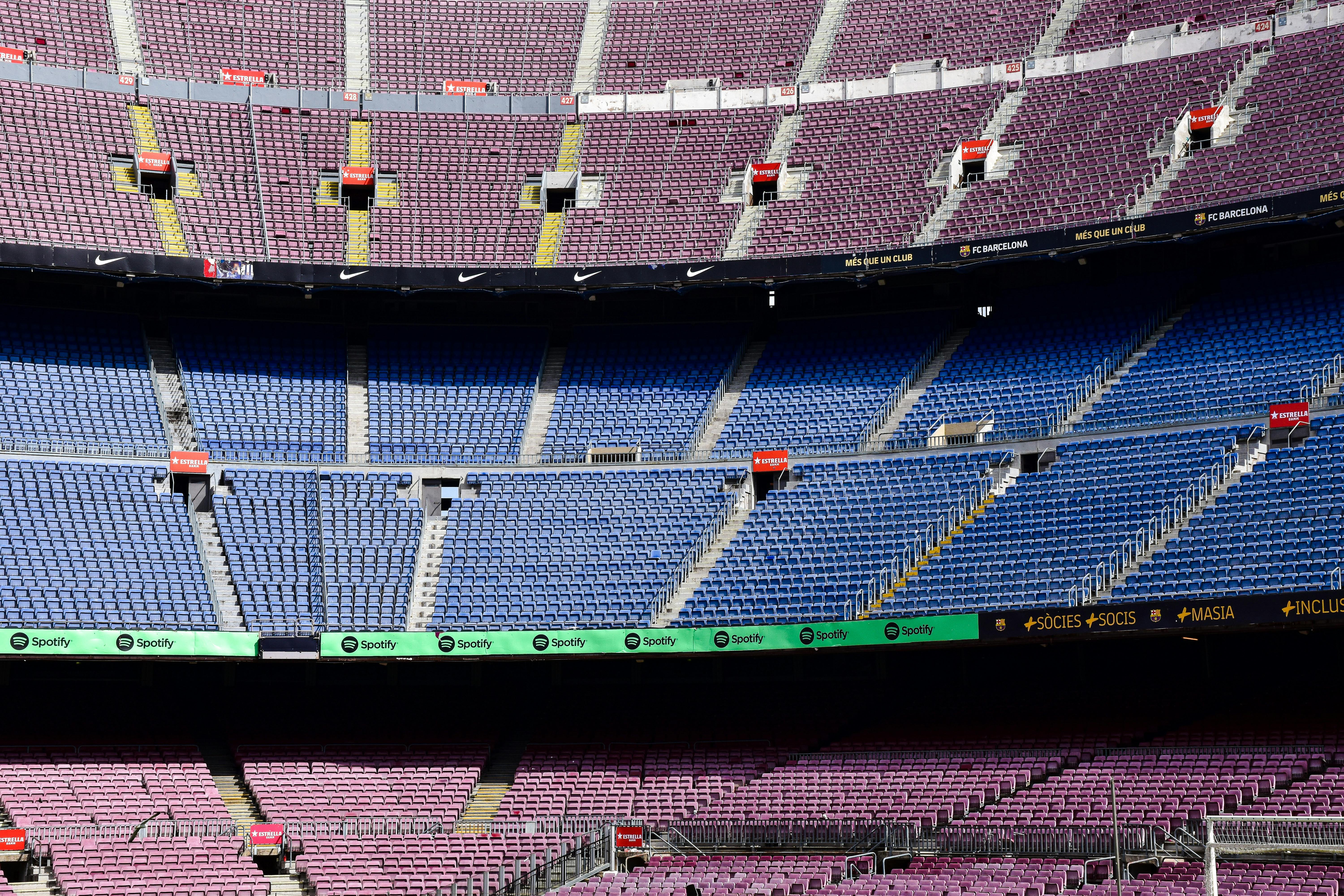
The number of people a stadium can hold is determined by how quickly they can leave it. Everything else in the design follows from that constraint.
Evacuation time sets the capacity
Safety standards specify that occupants must be able to reach a place of safety within a defined period. Capacity is then calculated backwards from the exit capability available, so the permitted figure is an output of the circulation design rather than an input to it.
Adding seats without adding exit width simply reduces the permitted occupancy, so expansion projects invariably involve circulation work.
This is why apparently minor stand alterations trigger disproportionately large construction programmes.
Flow is limited by the narrowest point
A crowd moving through a route travels no faster than its tightest section allows. Widening everything except one staircase produces no improvement at all, and spending on the rest of the route is wasted until the constriction is addressed.
Designers therefore work in terms of unit widths through the whole chain from seat to street rather than optimising individual elements.
Bottlenecks frequently sit outside the building, at gates, bridges or station entrances that the stadium does not control.
Normal egress and emergency egress differ
An ordinary end-of-match departure is slower than an evacuation because people move at a relaxed pace, stop and gather in groups. Many spectators also delay leaving entirely, which spreads the load without anyone planning it.
Emergency calculations assume purposeful movement, which is faster per person but far more sensitive to obstruction and to crowd density.
A design that handles the routine case comfortably may still fail the emergency case, and the two are assessed separately.
Density is the dangerous variable
Crowd flow rises with density up to a point and then collapses, because people can no longer take a full stride. The relationship is well established and the turning point arrives sooner than intuition suggests.
Beyond that point additional pressure produces no movement and generates the conditions in which crushing occurs.
Monitoring density rather than counting people is the central function of stadium crowd management, and camera-based systems are used precisely for that.
Staged departure is the main operational lever
Splitting the crowd's departure over time reduces peak density without requiring construction, which is why holding some spectators briefly is common practice. Away supporters are frequently held for this reason as well as for segregation.
Post-match entertainment, staggered transport departures and controlled gate opening all serve this function even when presented differently.
The alternative is building circulation capacity for a peak lasting a few minutes each fortnight, which is difficult to justify against any other use of the space.