
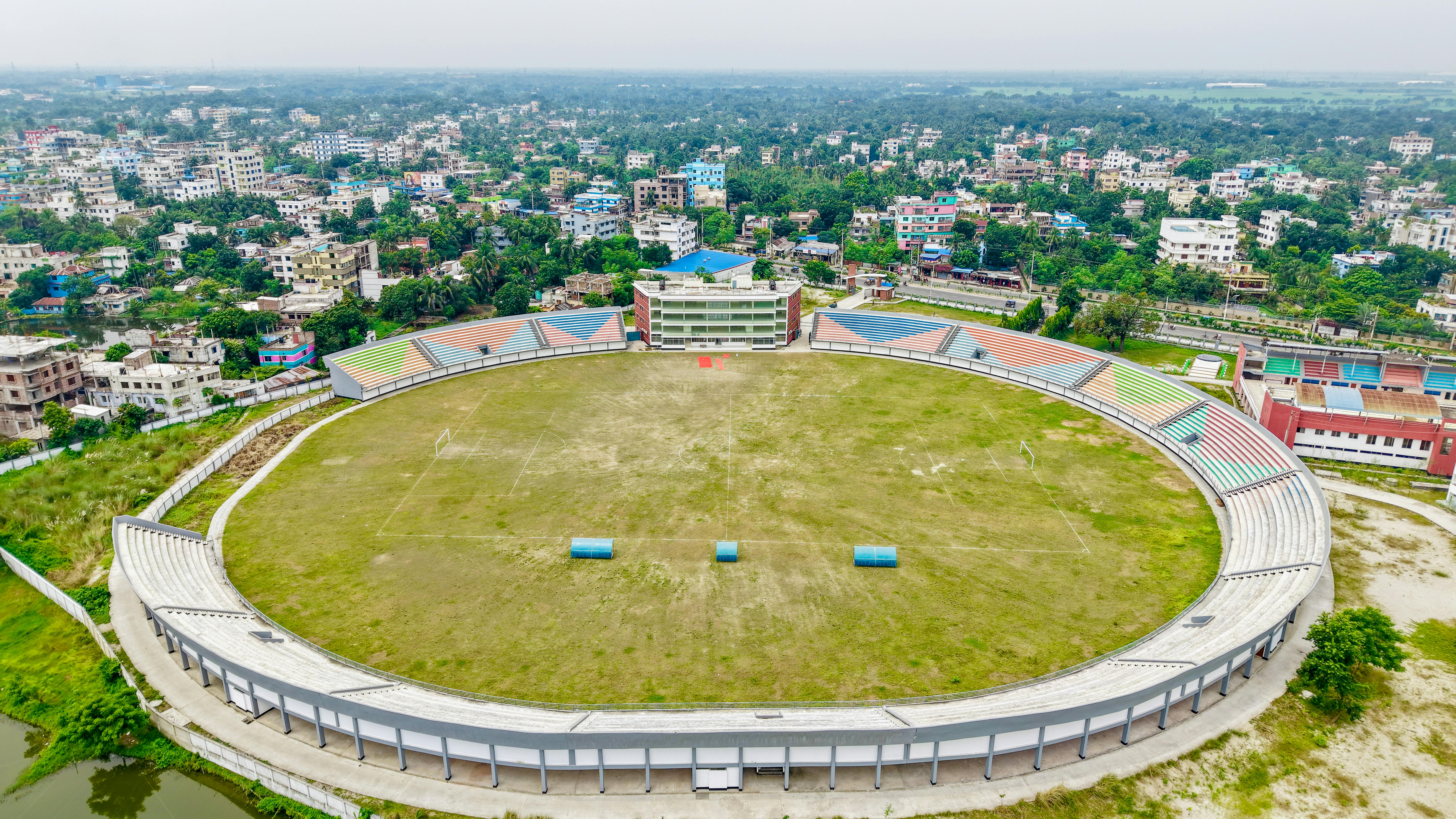
A stadium's highest electrical demand usually occurs during the interval rather than during play. The pattern is consistent enough that it shapes how venues are connected to the grid.
Everything switches on at once
Catering equipment, hot water systems, hand dryers and pumps all respond to the same fifteen-minute burst of activity. Each is modest alone and substantial together, because tens of thousands of people acting simultaneously turns small appliances into a serious load.
Demand across a stadium is highly synchronised because the crowd acts on the same signal at the same moment. An office building of similar floor area spreads the same activity across a whole day.
Few buildings of comparable size experience a load pattern that concentrated.
Water systems are a large hidden load
Heating water for washrooms and catering is energy-intensive, and storage capacity is drawn down rapidly during the interval. Stored hot water absorbs the first part of the demand and then runs out.
Recovery heating then runs hard immediately afterwards, extending the peak beyond the interval itself.
Pumping to upper concourses adds further demand, since pressure must be maintained while many outlets are open simultaneously.
Peak demand drives the connection cost
Large electricity users are charged partly on the maximum capacity they require rather than only on total consumption. A short spike therefore has a cost far beyond the energy it uses, since the network has to be built to serve that maximum whether or not it is often reached.
A venue used for a limited number of events pays for a connection sized to a peak occurring on a small number of days each year.
Reducing the height of that peak is worth more financially than reducing overall consumption.
Staggering and storage flatten the curve
Pre-heating water before the interval, sequencing catering equipment and delaying non-essential systems all move load out of the spike. None of these changes what a spectator experiences.
Battery storage charges during quiet periods and discharges into the peak, which reduces the maximum drawn from the grid without changing what the building does.
Building management systems automate this by working from the fixture schedule rather than reacting after demand has already risen.
Floodlights are steadier than expected
Modern lighting draws considerably less power than older installations and runs at a constant level once established. It also reaches full output immediately, which removes the long warm-up older systems required.
Because it is predictable, it is straightforward to plan around and contributes little to the variability that makes the interval expensive.
The difficult load is the human one, arriving in a synchronised burst that no amount of efficient equipment removes.