
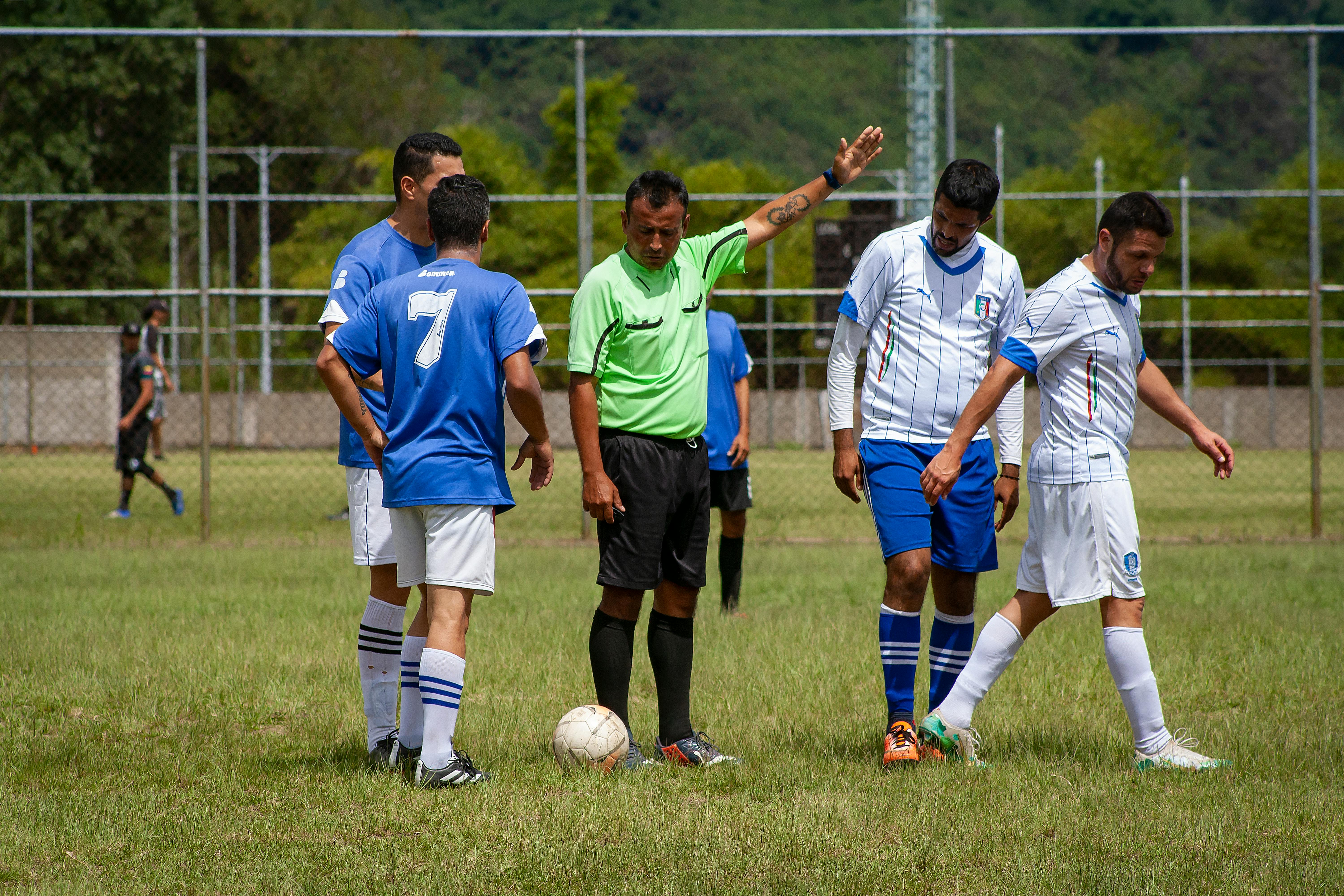
Video review could be settled entirely in a control room, yet referees are sent to a screen at the side of the pitch. The walk is deliberate and serves several purposes at once.
Authority has to stay on the field
The laws place the decision with the referee on the pitch. A review that ended in a remote room would move that authority somewhere else.
Keeping the final call with the on-field official preserves a single point of responsibility, which matters for how decisions are explained and appealed afterwards.
The monitor is the mechanism that lets the referee change a decision without ever handing the decision away.
Video assistants are checking, not deciding
The assistant's role is to identify whether something the referee saw, or missed, sits outside a reasonable reading of the incident.
That is a filtering task. It ends with a recommendation to look again, not with a verdict imposed from a truck.
Splitting the roles this way keeps the review narrow and stops the assistant from re-refereeing passages that were never in doubt.
Some decisions need the referee's own eyes
Factual questions such as whether the ball crossed a line can be resolved without the referee looking at anything.
Subjective questions cannot. Whether a challenge was reckless depends on interpretation, and the person applying that interpretation should be the one who saw the match unfold.
The monitor exists mainly for that second category, which is why it is used for fouls and red cards rather than for offside.
The walk buys time the process needs
Reviews take time to assemble. Operators locate the relevant angles, trim the sequence and queue it in a usable order.
The referee's walk overlaps with that preparation, so the delay is partly work happening rather than time being wasted.
It also gives players a visible signal that the decision is under review, which is easier to manage than an unexplained pause.
Visibility is doing real work
A crowd that can see the referee at a screen understands that something is being reconsidered, even without knowing what.
Broadcasts follow the referee to the monitor, and in many competitions the images shown there are the same ones the audience sees.
That shared view limits the suspicion that would follow a decision reversed by an unseen process, which is a large part of why the walk survives its own inefficiency.